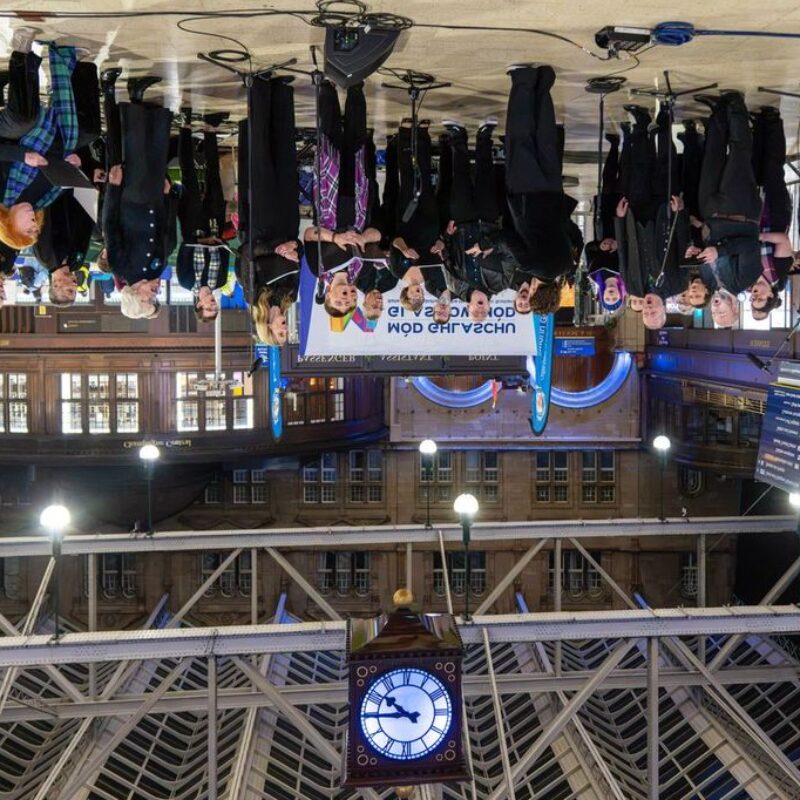
As Glasgow prepares to welcome the Commonwealth Games, and with a busy summer of events ahead for the City, Police Scotland is equipping 2,000 officers and staff with body worn video (BWV) cameras.
Greater Glasgow is Police Scotland’s largest division, managing the highest volume of events and policing operations nationwide. The launch of 2,000 body worn video cameras to officers and custody staff across the division marks a significant milestone, bringing the first phase of the national rollout close to completion. Since the technology was first introduced in Tayside last year, more than 10,000 devices are now in use in Scotland.
Chief Constable Jo Farrell has prioritised the introduction of body worn video for the Service and planning timescales were structured to ensure the technology was supplied to local officers ahead of the Commonwealth Games.
The camera, supplied by Motorola Solutions, is mounted on an officer’s body armour and captures both live video and audio during an incident.
Deputy Chief Constable Bex Smith said: “In just over 120 days, we will welcome guests from all over the UK and the Commonwealth to enjoy the Games and body worn video will be in use to help keep everyone who visits Scotland safe.
“The national roll out of body worn video is a key priority and contributes to our vision of safer communities, less crime and a thriving workforce.
“Body worn video is an important addition to a police officer’s kit and the cameras are our extra eyes and ears when keeping our communities safe. They can help to de-escalate incidents, improve public trust in policing and reduce complaints, as well as support officer and staff safety, and bring wider benefits to the criminal justice system.”
Since its introduction in March 2025, the cameras have captured more than 700,000 recordings with over 140,000 hours of footage uploaded. More than 44, 000 media files have been exported to our digital evidence sharing system, DESC.
Officers in Renfrewshire & Inverclyde, Argyll & West Dunbartonshire will be issued with the cameras in late April marking the end of the first phase of the rollout.
At this point every frontline uniformed police officer in Scotland, including Special Constables, will wear a video camera on their uniform while on duty and will activate it when using police powers, whether a stop and search, an arrest of a suspect or executing a search warrant.
Police staff in custody suites will also use cameras when interacting with people in custody.
DCC Bex Smith added: “We are experiencing the benefits of this new technology which is helping to improve the quality of evidence that is presented in court, which in turn helps deliver faster justice for victims by increasing early guilty pleas and reduce the time spent at court for victims, witnesses and police officers.
“There is strong public and partner support for body worn video in Scotland and we will continue to explain our use of this important technology including assurance around data privacy and human rights considerations.”
Justice Secretary Angela Constance said: “I am pleased that thousands of police officers across Scotland are now equipped with body worn video, with the national rollout nearing completion.
“Body worn video can increase public confidence in policing, protect officers’ safety and support the investigation and prosecution of crime, benefitting victims and witnesses and the general public.
“Glasgow has a tremendous record for hosting major events and as the city prepares for an outstanding fortnight of sporting and cultural events at the Commonwealth Games, this will be further reassurance for visitors.
“The national rollout of body worn video has been enabled by record Scottish Government funding for policing, and is supported by our world-leading initiative for sharing digital evidence from crime scene to court room, backed by more than £30 million of investment.”
Body worn video footage may be used as evidence, but it will not replace existing procedures and requirements when gathering all available information. It will remain a matter for the Crown Office and Procurator Fiscal Service (COPFS) to review and determine competence on a case-by-case basis.
Video footage will be uploaded to secure police systems and the evidence will be shared with the COPFS using the new Digital Evidence Sharing Capability (DESC) system.
The introduction of body worn video is not intended to encourage the greater use of single police officer deployments or alter current deployment models for policing in Scotland.